Size and shape reification
 The modified application of Perron's theorem to evolutionary and palaeoecological studies of invertebrates in palaeobiology
Article number: 16.3.22A
https://doi.org/10.26879/375
Copyright Palaeontological Association, September 2013
Schaubcylindrichnus
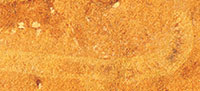 Morphological variability of the trace fossil Schaubcylindrichnus coronus as a response to environmental forcing
Article number: 16.1.5A
https://doi.org/10.26879/327
Copyright Palaeontological Association, January 2013
Scavenging of a glyptodont
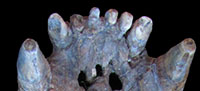 First evidence of scavenging of a Glyptodont (Mammalia, Glyptodontidae) from the Pliocene of the Pampean region (Argentina): taphonomic and paleoecological remarks
Article number: 16.2.15A
https://doi.org/10.26879/331
Copyright Palaeontological Association, May 2013
Rusinga Island Flora
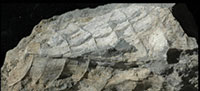 A morphotype catalog and paleoenvironmental interpretations of early Miocene fossil leaves from the Hiwegi Formation, Rusinga Island, Lake Victoria, Kenya
Article number: 16.3.28A
https://doi.org/10.26879/342
Copyright Palaeontological Association, November 2013
Revueltosaurus tooth enamel
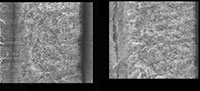 Tooth enamel microstructure of Revueltosaurus and Krzyzanowskisaurus (Reptilia:Archosauria) from the Upper Triassic Chinle Group, USA: Implications for function, growth, and phylogeny
Article number: 16.1.1A
https://doi.org/10.26879/319
Copyright Society for Vertebrate Paleontology, January 2013
Retrodeformation and phylogeny
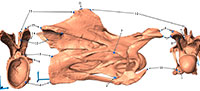 Retrodeformation as a test for the validity of phylogenetic characters: an example from diplodocid sauropod vertebrae
Article number: 16.1.2T
https://doi.org/10.26879/312
Copyright Palaeontological Association, January 2013
Rebuttal to Furió and Pons-Monjo
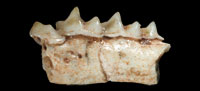 Proportions, characters and chronologies: their contribution to systematic paleontology. A rebuttal to Furió and Pons-Monjo
Article number: 16.2.20A
https://doi.org/10.26879/412
Copyright Society for Vertebrate Paleontology, August 2013
Quasihomothetic transformation
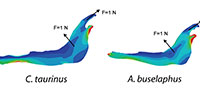 Quasi-homothetic transformation for comparing the mechanical performance of planar models in biological research
Article number: 16.3.6T
https://doi.org/10.26879/365
Copyright Palaeontological Association, November 2013
Qesem Bats
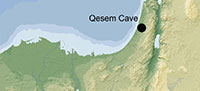 Bat remains (Mammalia, Chiroptera) from the Middle Pleistocene site of Qesem Cave, Israel, with the first Pleistocene record of fruit bats in the Mediterranean region
Article number: 16.3.23A
https://doi.org/10.26879/380
Copyright Society for Vertebrate Paleontology, October 2013
Protomonaxonid relationships
 Relationships of the Cambrian Protomonaxonida (Porifera)
Article number: 16.2.9A
https://doi.org/10.26879/339
Copyright Paleontological Society, May 2013
Page 48 of 76
